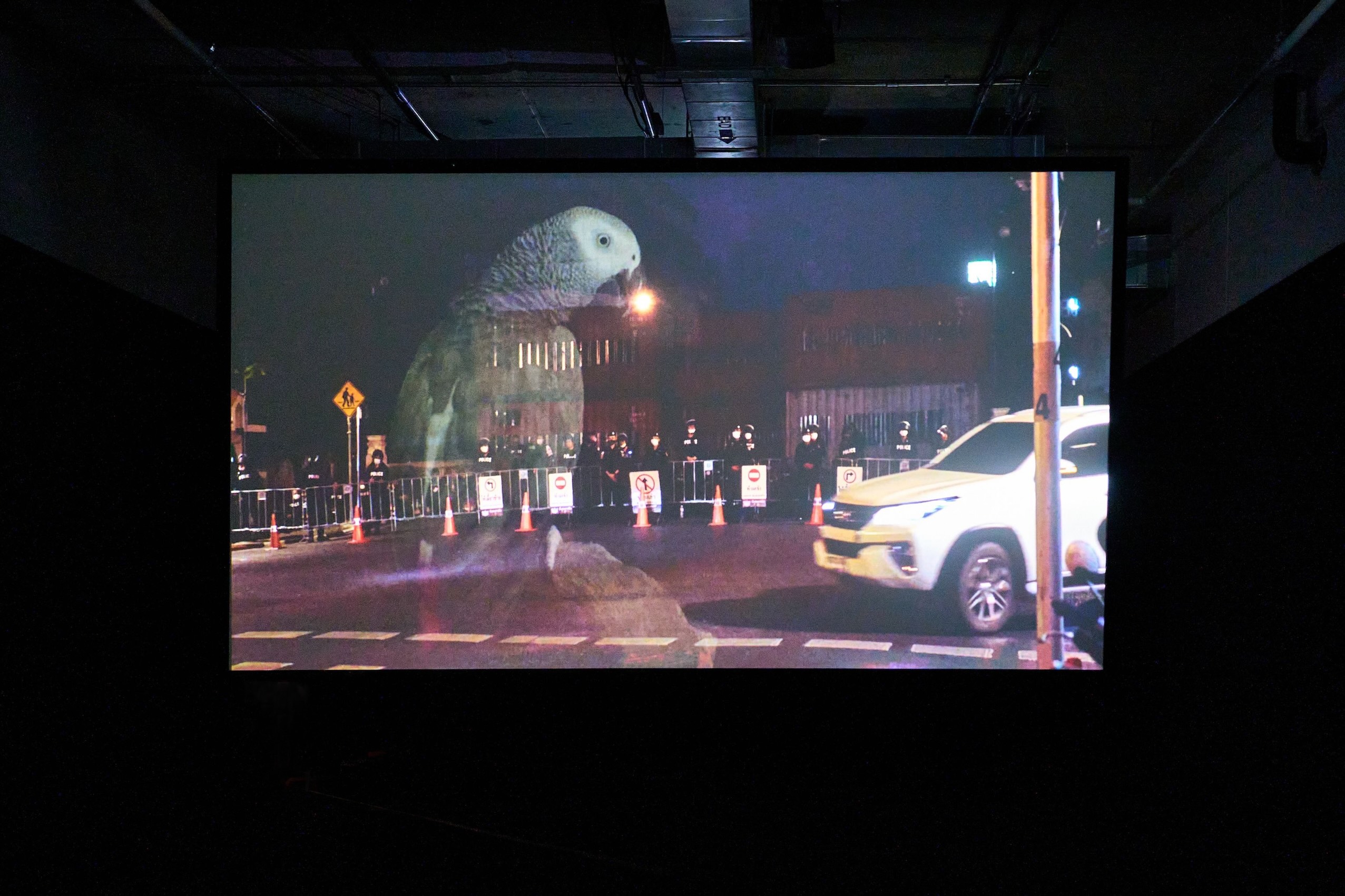
The Web of Time, 2022
4K video with sound · 27:17 min
The Web of Time interrogates human exceptionalism by situating human life within a shared evolutionary continuum. Through images of bonobos and other species, alongside a narrative unfolding through memory, the work destabilises the hierarchies that organise social and political authority, suggesting that distinctions between rulers and subjects arise not from natural order but from historically constructed systems of power.
The Web of Time interrogates human exceptionalism by situating human life within a shared evolutionary continuum. Through images of bonobos and other species, alongside a narrative unfolding through memory, the work destabilises the hierarchies that organise social and political authority, suggesting that distinctions between rulers and subjects arise not from natural order but from historically constructed systems of power.
The work considers the consequences of human action within this shared condition of life. Wars, territorial conflicts, and environmental transformation are often treated as human affairs, yet their effects extend across animals, habitats, and the fragile conditions that sustain life itself.
Moving between the voices of youth, ageing human skin, and a technological voice that reads fragments of time, the work approaches time not as a linear progression but as a dense temporal web. Within this structure, origin, responsibility, and disappearance remain inseparable, revealing how human life unfolds within the same temporal processes of emergence, decay, and transformation that shape all living beings.