Making Shadows Speak, 2025
Single-channel 4K video installation · 14:59 min
Making Shadows Speak traces how the afterlives of political violence, colonial occupation, and geopolitical transformation remain embedded within landscapes long after history is declared complete. Rather than disappearing into archives or historical narratives, these forces continue to inhabit environments, infrastructures, and spatial arrangements that shape the present.
Making Shadows Speak traces how the afterlives of political violence, colonial occupation, and geopolitical transformation remain embedded within landscapes long after history is declared complete. Rather than disappearing into archives or historical narratives, these forces continue to inhabit environments, infrastructures, and spatial arrangements that shape the present.
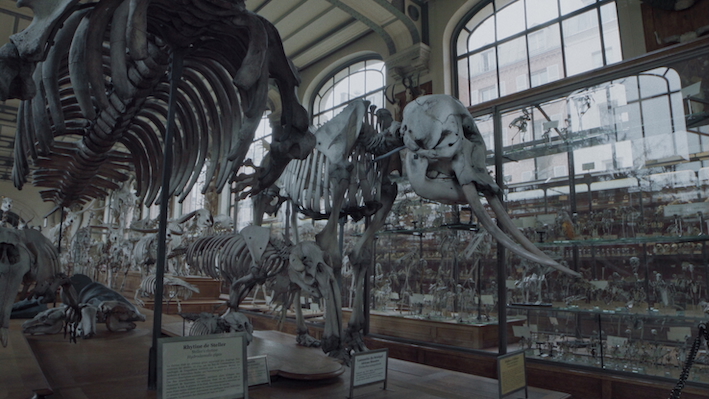
Across abandoned infrastructures, imperial monuments, shifting borders, and deserted zoological spaces, the work unfolds through landscapes where life appears largely through absence. Animal skeletons preserved in museums, empty zoo enclosures, and overgrown terrains mark environments where living bodies have vanished, while the structures that produced this disappearance remain intact.
Rather than reconstructing historical events through human testimony alone, the work approaches landscape itself as a field where historical forces persist. Ruins, spatial silence, and architectural remains reveal how systems of empire, territorial control, and geopolitical conflict continue to organise the present.
Near the end of the film, a brief interruption occurs. A parrot enters the frame and perches on the head of a sculpture of Napoleon. This fleeting act introduces a living presence into a landscape structured by disappearance, momentarily unsettling the authority embodied in the monument.
By bringing imperial monuments, abandoned spaces, and this unexpected gesture into the same visual field, Making Shadows Speak suggests that historical violence does not simply end when it is declared past. It remains embedded in landscapes and spatial structures that continue to carry the unresolved weight of history.