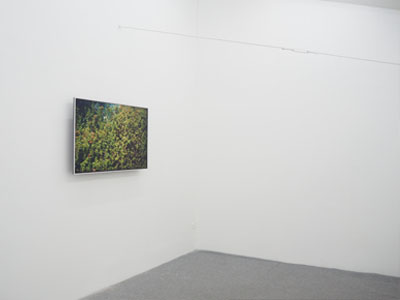
The Broken Ladder, 2018
Mixed-media installation with video and archival documents
The Broken Ladder is a solo exhibition that examines how housing, debt, and ownership structure social mobility and everyday life. Rather than approaching “home” as a stable symbol of success, the project exposes property as a system of control shaped by finance, law, and unequal access.
The Broken Ladder is a solo exhibition that examines how housing, debt, and ownership structure social mobility and everyday life. Rather than approaching “home” as a stable symbol of success, the project exposes property as a system of control shaped by finance, law, and unequal access.
The exhibition consists of a multi-part installation combining video and three-dimensional works. Each element is grounded in the artist’s direct experience of purchasing a house and entering long-term financial obligation.
The video work, presented on the upper floor, was filmed from inside a moving car as it passed through areas where luxury houses are marketed. The camera records surrounding environments—construction workers, street vendors, and informal labour—coexisting with sites of high-value property. This moving landscape is overlaid with a voiceover derived from recorded conversations between a real estate agent and the artist’s companion during a house viewing.
Rather than using the salesperson’s original voice, the promotional language was transcribed, edited, and re-narrated by collaborators—one in Thai and another in English. Through this process of mediation and translation, the work reveals how property is produced not only through architecture, but through persuasive discourse, aspiration, and repetition.
On the ground floor, a series of sculptural works materialise the financial and legal mechanisms behind homeownership. Four gold coins are engraved with numbers taken from the land title deed, specifically from the survey markers used to define property boundaries. These measurements are transformed into symbolic markers of value and fixation.
A copy of the original bank draft documents the amount paid for the house. Displayed as an object, it represents the principal debt, excluding interest, and exposes the long-term burden embedded in the act of purchase.
A large engraved glass panel reproduces the land title deed at three times its original scale. The engraved lines correspond precisely to the rectangular boundary markings issued by the Land Department. Enlarged and rendered fragile, the legal framework of ownership becomes visually dominant yet materially unstable.
By assembling these elements, The Broken Ladder transforms financial documents, legal measurements, and promotional narratives into spatial and material experience. The project does not critique housing from a distance, but unfolds through the artist’s own exposure to debt, regulation, and institutional authority.
Through this entanglement of video, objects, and personal finance, the exhibition reveals how housing operates as a system that unevenly distributes security and precarity. It challenges the promise of upward mobility and exposes how stability is often sustained through long-term vulnerability.