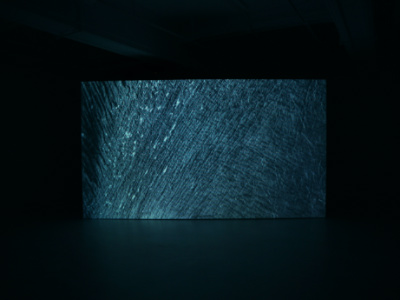
His tune is heard on the distant hill, 2019
Single-channel video, sound, drawing, and neon light installation
His Tune Is Heard on the Distant Hill examines how postwar reconstruction, diplomacy, and cultural exchange shaped the transnational life of Hanako, a Thai elephant sent to Japan in 1949, shortly after the end of World War II.
His Tune Is Heard on the Distant Hill examines how postwar reconstruction, diplomacy, and cultural exchange shaped the transnational life of Hanako, a Thai elephant sent to Japan in 1949, shortly after the end of World War II.
Arriving in a country still recovering from devastation and loss, Hanako became part of Japan’s efforts to restore social normalcy and collective hope through symbolic acts of international goodwill.
Developed through archival research, site visits, and moving-image documentation, the project traces how Hanako’s life unfolded within institutions such as Ueno Zoo, where care, display, surveillance, and public spectacle intersected. Rather than reducing her to a symbolic figure, the work focuses on how animal bodies are embedded within postwar infrastructures of governance, diplomacy, and emotional repair.
Created in close collaboration with Qenji Yoshida , and grounded in long-term research, the project follows the routines, spatial arrangements, and administrative systems that structured Hanako’s captivity. It reveals how compassion, discipline, and political messaging operated simultaneously through everyday practices, exposing the subtle mechanisms through which power circulates in human–animal relations.
By situating Hanako’s trajectory within broader histories of postwar recovery, migration, and uneven mobility, the work reflects on how displacement and belonging are distributed across species and borders. It proposes an expanded understanding of political life in which nonhuman bodies are recognised as participants in historical processes.
Through restrained narration and observational filming, His Tune Is Heard on the Distant Hill approaches history not as a closed narrative, but as a layered field in which memory, diplomacy, care, and control remain entangled. The work positions artistic practice as a form of attentive witnessing, tracing how lives are shaped at the intersection of affection, governance, and geopolitical repair.